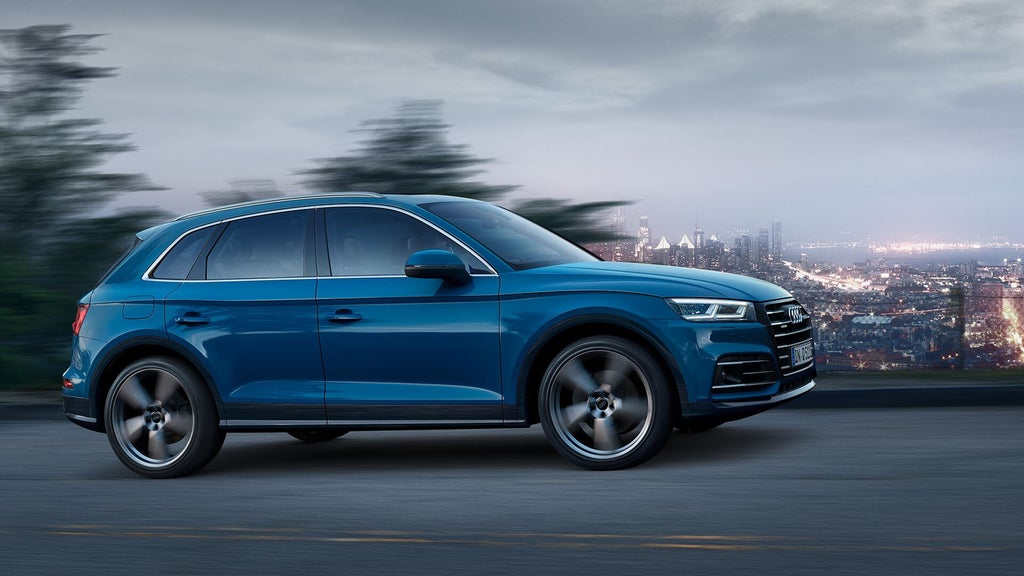
A new line with TFSI e

The term e-tron describes all purely electric battery-powered vehicles from Audi. The plug-in hybrid models come under the heading of "TFSI e". This suffix provides a clear indication that a vehicle can be moved in two ways. An electric drive with a compact battery is installed for short distances, and an additional combustion engine is provided for longer distances.
What is a PHEV?

Hybrids combine two drive technologies: they each have an internal combustion engine and an electric motor. With hybrids, the electric drive can be used locally emission-free as the sole engine or can support the combustion engine with additional boost power.

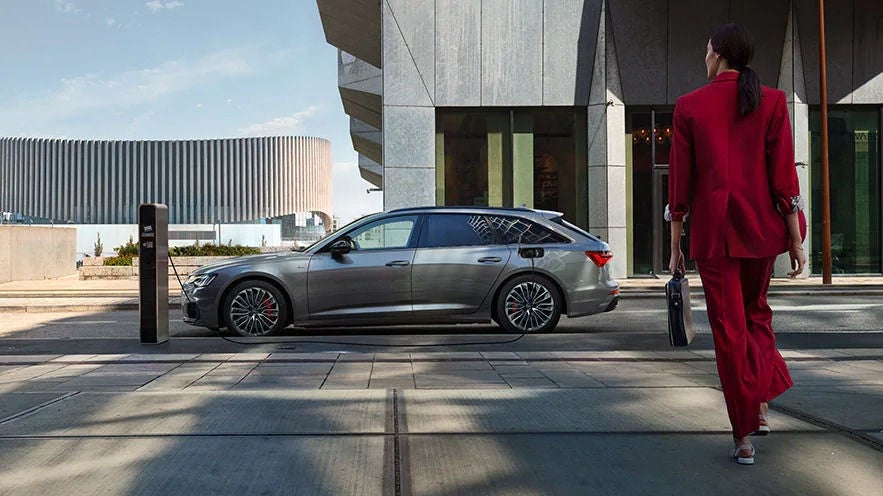
The plug-in hybrid has now established itself as the most common form of hybrid vehicle today. These "plug-in hybrid electric vehicles" are termed PHEVs for short. The battery can be charged externally, at a charging station or socket.

Audi A7 Sportback 55 TFSI e:
Combined fuel consumption:1 2.1–1.9 l/100 km
Combined power consumption:1 18.1–17.5 kWh/100 km
Combined CO₂ emissions:1 48–44 g/km

Charging management and suitability for everyday use

Plug-in hybrids therefore manage the balancing act between two drive worlds. The aim in developing the PHEV is a high level of suitability for everyday use and simple charging management that enables the electric driving experience. The intelligent drive management system decides when to drive purely electrically, when to use regenerative breaking and when to glide idly when the combustion engine is deactivated, and when the combustion engine should be switched on. With the help of various vehicle sensors, it thus controls the interaction between the electric motor and the combustion engine.
The Audi PHEV models charge with up to 7.4 kW of power. This means that most hybrid models can be recharged in around 2.5 hours at an industrial socket.2 A good amount of space is also important in order for the vehicle to be suitable for everyday use: the batteries are integrated into the boot of the Audi PHEV models in a compact and space-saving way.

Drive variants and battery technology

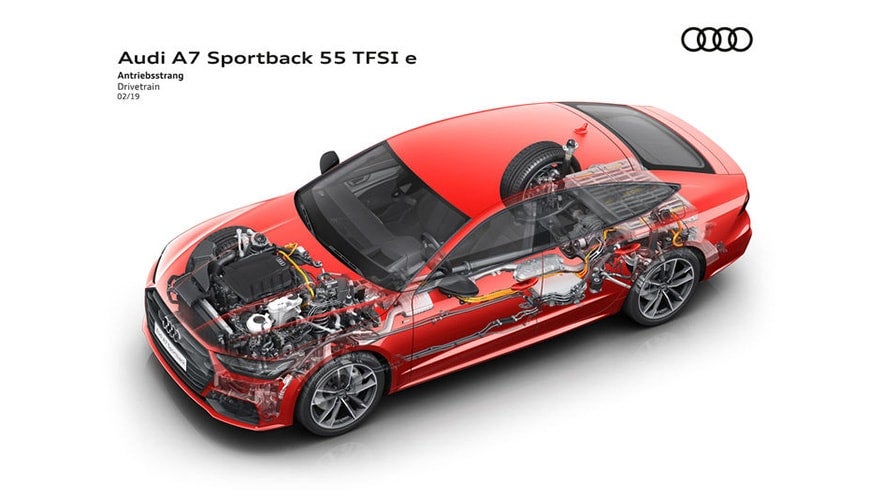
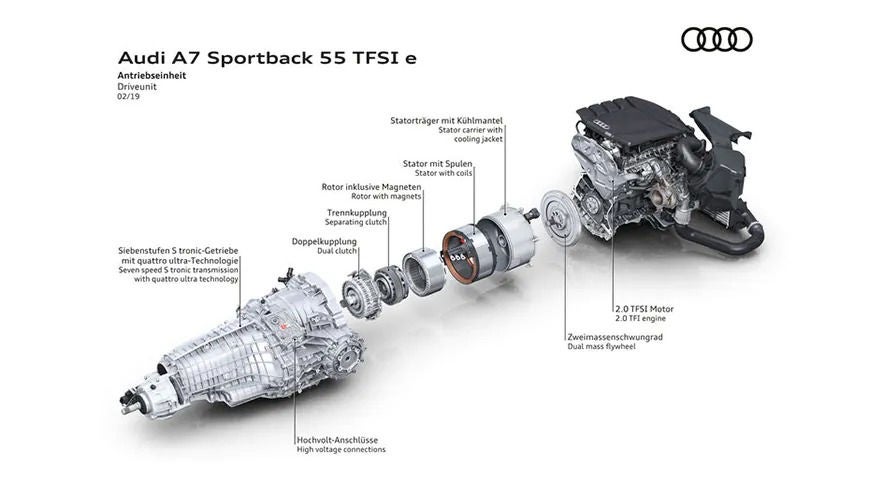
Audi combines the turbo-charged petrol engine with direct injection (TFSI) with an electric motor with a lithium-ion battery installed under the floor of the luggage compartment. The electric motor of the hybrid drive train is integrated into the transmission in all plug-in hybrid models. The hybrid module consists of the electric motor and a disconnect clutch that connects the TFSI engine with the drive train.
In all plug-in hybrids, power is transmitted via all four wheels – for good traction even in poor road and weather conditions, and for high agility when driving in a sporty manner.

Audi A7 Sportback 55 TFSI e:
Combined fuel consumption:1 2.1–1.9 l/100 km
Combined power consumption:1 18.1–17.5 kWh/100 km
Combined CO₂ emissions:1 48–44 g/km  

The battery

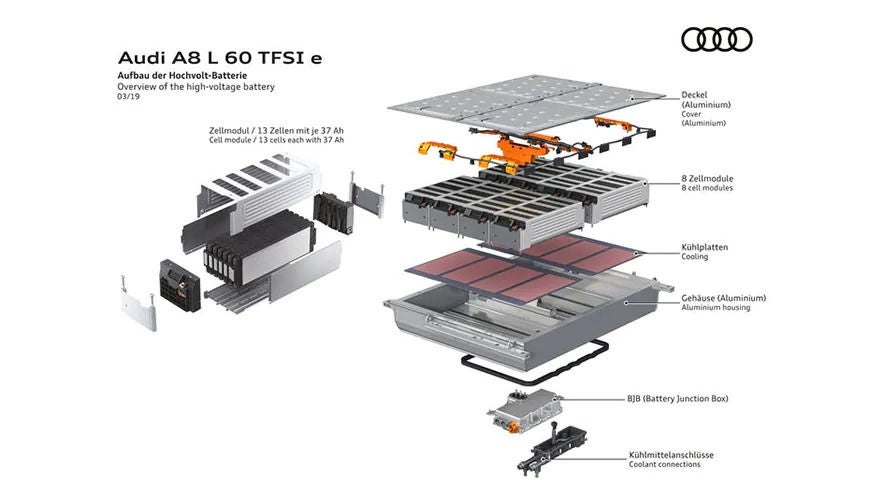
The electricity for the electric motors comes from a battery system with liquid-cooled lithium-ion cells, which is located under the floor of the luggage compartment. The battery stores up to 14.1 kWh.

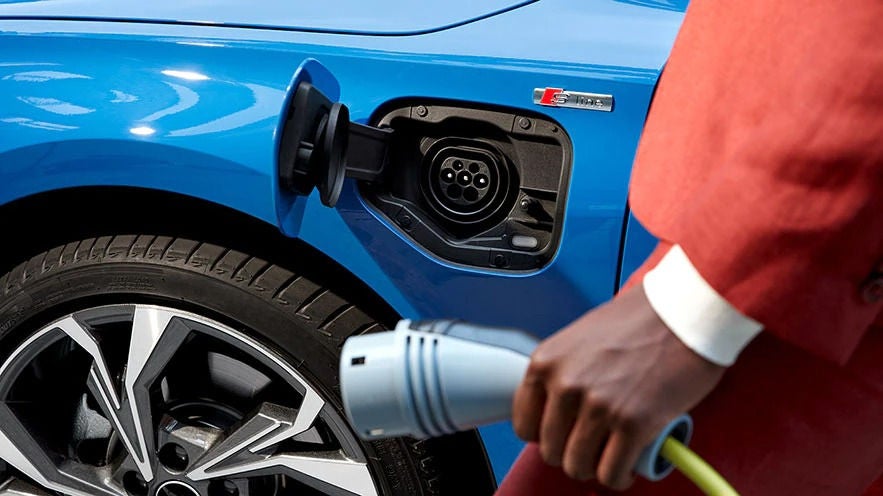
To fully charge the 14.1 kWh battery installed in most models takes about 2.5 hours2 via a 400-volt high-voltage port with 7.4 kW output, and about 6.5 hours2 at a conventional 230-volt household socket.

Audi offers a warranty of 8 years or 160,000 km for the high-voltage batteries of new vehicles, depending on which of the two events occurs first.

Four driving modes for efficient driving

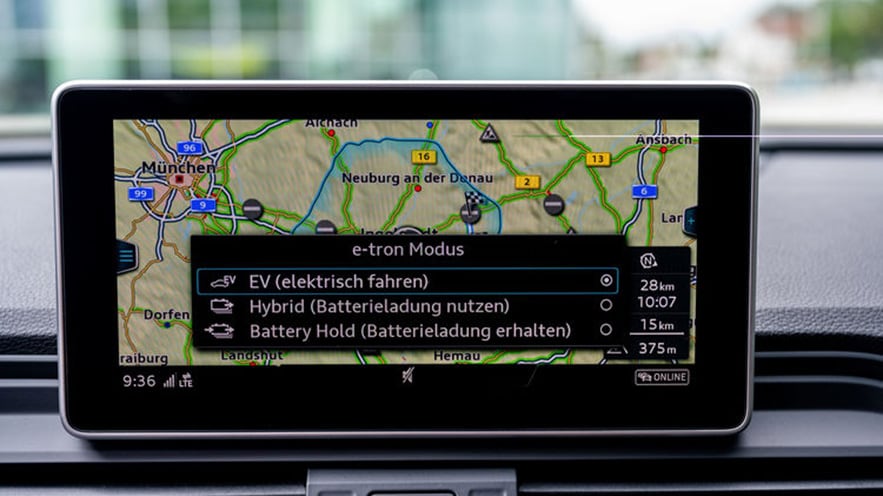
The drive concept is designed in such a way that lots of daily short distances can be covered purely electrically. The type of drive used can be regulated using four different driving modes: purely electric driving (EV), primary use of the combustion engine to preserve (Hold) or increase (Charge) the battery charge for electric driving later, or efficient teamwork (Hybrid).  

Recuperation and boosting

Recuperation – also known as regenerative braking – is the recovery of energy. When braking, the Audi PHEV models recover power, depending on the distance travelled and the braking processes performed.
When boosting,3 the electric motor supports the combustion engine depending on the driving mode selected, and thus provides additional thrust.

Loading..